
Your website should be your best salesperson, but what if it is silently losing you customers every day? Many small business owners invest time and money into building a website, yet it fails to generate leads, calls, or inquiries. It may look visually appealing, but design alone does not guarantee results. If your website is not converting visitors into customers, there is a deeper issue.
In most cases, the problem is poor web design, including weak structure, bad user experience, and lack of clear direction. The good news is that once you understand how web design actually works, you can identify these gaps and improve them. With the right approach, your website can become a powerful tool that consistently brings in quality leads.
What is Web Design?
Web design is the process of creating how a website looks, feels, and works for users. It includes layout, colors, fonts, images, and how easily visitors can navigate your site.
In simple terms, web design is not just about making a website look good. It is about making sure visitors understand your business quickly and take action.
At the same time, web design focuses on both appearance and usability. A well-designed website should guide users smoothly and help them find what they need without confusion.
Why Small Businesses Struggle Without Good Web Design
Many small business websites fail not because of lack of effort, but because they are built without a clear strategy. Business owners often focus on how the website looks instead of how it performs. A visually decent website is not enough if it does not guide users, communicate value, and drive action. Without proper planning, the website becomes just an online brochure instead of a lead-generating tool.
Here are the most common reasons why small business websites struggle:
1. Lack of Clear Structure
A website without proper structure confuses visitors. If users cannot quickly understand what your business offers or where to click next, they leave. Clear navigation and logical page flow are essential.
2. No Clear Message
Many websites fail to communicate their value. Visitors should immediately know what you do, who you help, and why they should choose you. Without this clarity, they lose interest.
3. High Bounce Rates
When users land on a slow, cluttered, or confusing website, they exit within seconds. This increases bounce rate and reduces chances of conversion.
4. Poor User Experience
Difficult navigation, too much text, or lack of mobile optimization frustrates users. A bad experience directly impacts trust and engagement.
5. No Strong Call to Action
If your website does not guide users on what to do next, such as calling, booking, or filling a form, you lose potential leads.
6. Lack of Trust and Credibility
An outdated or unprofessional design makes your business look unreliable. In a competitive market like Australia, users quickly move to competitors with better websites.
Without strong web design, even a good business can struggle to generate leads online. The right structure, clarity, and user experience can completely change how your website performs. Investing in proper web design is not an expense, it is a growth decision.
Key Elements of Effective Web Design
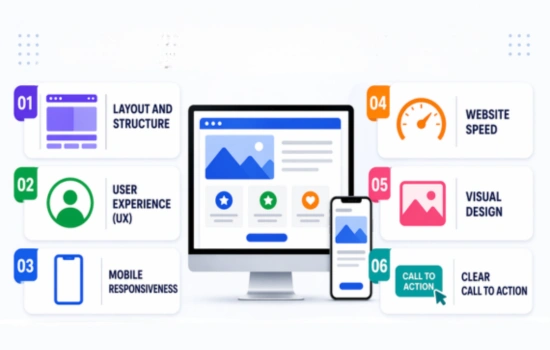
Understanding the core elements of web design helps you identify what your website might be missing and why it may not be performing as expected. When these elements are implemented correctly, your website becomes easier to navigate, builds trust, and significantly improves your chances of generating leads.
1. Layout and Structure
Your website layout is the foundation of how users interact with your content. A well-structured layout ensures that visitors can instantly understand where they are and what they should do next.
A clear structure typically includes:
- A strong header with navigation
- A hero section explaining your service
- Supporting sections with benefits and proof
- A clear call to action
When your layout is cluttered or disorganized, users feel overwhelmed and leave quickly. On the other hand, a clean and logical structure guides users naturally through your website, improving engagement and conversions.
2. User Experience (UX)
User experience is about how easy and enjoyable it is for someone to use your website. Every interaction should feel smooth, intuitive, and effortless.
Good UX includes:
- Easy navigation with clear menus
- Readable content with proper spacing
- Logical flow of information
- Minimal distractions
If users have to think too much or struggle to find information, they will leave. A strong UX keeps visitors engaged, builds trust, and encourages them to explore further.
3. Mobile Responsiveness
Today, a large portion of users browse websites on their phones, especially in markets like Australia. If your website is not optimized for mobile devices, you are likely losing a significant number of potential customers.
A mobile-responsive website:
- Adjusts perfectly to all screen sizes
- Keeps text readable without zooming
- Ensures buttons are easy to click
- Maintains fast loading speed
Mobile friendliness is not just a user experience factor, it is also a key ranking factor for search engines.
4. Website Speed
Website speed plays a critical role in both user experience and SEO. Users expect a website to load within seconds, and any delay can lead to frustration and drop-offs.
Common causes of slow websites include:
- Large unoptimized images
- Poor hosting
- Excessive scripts or plugins
A fast website:
- Keeps users engaged
- Reduces bounce rate
- Improves search engine rankings
Even a delay of a few seconds can significantly impact your conversions.
5. Visual Design
Visual design is what creates the first impression of your website. It includes colors, typography, images, and overall branding consistency.
A strong visual design:
- Builds trust and credibility
- Reflects your brand identity
- Makes your website look professional
Consistency is key. Using too many colors or inconsistent fonts can make your website look unprofessional and confusing. A clean and modern design helps users feel confident in your business.
6. Clear Call to Action
A call to action is what turns a visitor into a lead. Every page on your website should guide users toward a specific action.
Effective CTAs include:
- Call Now
- Get a Free Quote
- Book a Consultation
- Contact Us
Your CTA should be:
- Clearly visible
- Action-oriented
- Strategically placed across the page
Without a clear call to action, even interested visitors may leave without taking the next step.
All these elements work together to create a website that not only looks good but performs effectively. Focusing on these key elements ensures your website supports your business growth instead of holding it back.
Types of Web Design
Many small business owners pick the wrong type and later struggle with limitations, costs, or poor results. Understanding these options will help you make a smarter decision based on your goals, budget, and growth plans.
Static Website
A static website is one of the simplest forms of web design where the content remains fixed unless it is manually updated by a developer. These websites are usually built using basic coding and do not require a backend system or database. Because of this, they are fast, secure, and relatively low-cost to build. However, they lack flexibility.
Making even small changes like updating text or adding new pages often requires technical support, which can slow down your marketing efforts. Static websites are ideal when your content does not change frequently and you only need a basic online presence.
Best for: Small businesses or individuals who need a simple, low-maintenance website with minimal updates, such as a basic company profile or portfolio.
Dynamic Website
A dynamic website is more advanced and flexible, allowing you to update content easily without needing technical knowledge. These websites are typically built using content management systems like WordPress, where you can add pages, publish blogs, and make changes through a dashboard.
Dynamic websites support SEO, content marketing, and scalability, making them a strong choice for businesses that want to grow online. They also allow integration with tools like contact forms, analytics, and marketing platforms. While they may require slightly higher investment initially, they offer long-term value and control.
Best for: Growing businesses that want to regularly update content, run SEO campaigns, and scale their online presence over time.
Template-Based Website
A template-based website is built using pre-designed layouts that can be customized with your content, images, and branding. This approach is faster and more cost-effective compared to building a website from scratch. It allows businesses to launch quickly without investing heavily in design and development.
However, templates come with limitations. You may have restricted design flexibility, and your website might look similar to others using the same template. While it works well for starting out, it may not fully support advanced customization or high conversion strategies.
Best for: Startups and small businesses with limited budgets who want a quick and professional-looking website without complex requirements.
Custom Website Design
A custom website is designed and developed from scratch based on your specific business goals, audience, and branding. Every element, from layout to functionality, is tailored to create a unique and high-performing website. This type of design focuses heavily on user experience, conversion optimization, and scalability.
While it requires more time and investment, it provides complete control and flexibility. A custom website can be built to support advanced features, integrations, and long-term growth strategies, making it a powerful asset for your business.
Best for: Businesses that want a strong brand identity, better user experience, and a website specifically optimized for conversions and long-term growth.
Business Website
A business website is designed to showcase your services and generate leads. It focuses on clearly presenting what you offer, building trust, and guiding users to take action, such as contacting you or booking a service.
These websites usually include essential pages like Home, About, Services, and Contact, along with strong calls to action. The main goal is not just to inform visitors but to convert them into potential customers. A well-designed business website plays a key role in establishing credibility and supporting your marketing efforts.
Best for: Service-based businesses, local businesses, and professionals who want to generate inquiries, calls, or bookings through their website.
eCommerce Website
An eCommerce website is built specifically for selling products online. It includes features such as product listings, categories, shopping carts, secure payment gateways, and order management systems.
Unlike a standard business website, the primary goal here is to facilitate transactions and drive sales. A well-designed eCommerce website focuses on product presentation, user experience, and a smooth checkout process. It also supports marketing strategies like discounts, upselling, and customer retention.
Best for: Businesses that sell physical or digital products and want to generate revenue directly through online sales.
Instead of choosing based on cost alone, focus on what will support your growth and help you generate results. A well-chosen website type becomes a strong foundation for your online success.
Common Web Design Mistakes to Avoid
Many small businesses invest in a website but do not get results because of small but critical mistakes. These issues affect user experience, reduce trust, and stop visitors from taking action.
Slow Website
A slow website is one of the most damaging problems you can have. When a visitor clicks on your website, they expect it to load quickly. If it takes more than a few seconds, most users will leave without even seeing your content. This creates a poor first impression and increases your bounce rate. Slow speed is usually caused by large image files, low-quality hosting, too many plugins, or unoptimized code.
Beyond user experience, speed also plays a major role in SEO. Search engines prefer faster websites, so a slow site can reduce your rankings and visibility. This means you lose both traffic and potential leads.
No Mobile Optimization
Today, a majority of users browse websites on their mobile devices, especially in markets like Australia. If your website is not optimized for mobile, it can appear broken, difficult to navigate, or hard to read. Users may need to zoom in, scroll awkwardly, or struggle to click buttons, which leads to frustration.
A poor mobile experience directly results in lost customers because users will quickly leave and choose a competitor with a better website. Mobile optimization is no longer optional, it is essential for both user experience and search rankings.
Poor Navigation
Navigation is how users move through your website. If your navigation is confusing, cluttered, or poorly structured, visitors will not be able to find what they are looking for. This creates frustration and increases the chances of them leaving your site.
Common navigation issues include too many menu items, unclear labels, hidden pages, or lack of a clear flow. A good navigation system should guide users naturally from one section to another, helping them understand your services and take action easily. When navigation is simple and intuitive, users stay longer and engage more.
No Clear Call to Action
A website without a clear call to action fails to convert visitors into leads. Even if someone is interested in your service, they may leave if they do not know what to do next. Your website should always guide users toward a specific action, such as calling your business, filling out a form, or booking a service.
Without clear direction, users hesitate or lose interest. This results in missed opportunities and lower conversion rates. A strong call to action placed strategically across your website ensures that visitors take the next step.
Outdated Design
An outdated website design can make your business appear unprofessional and unreliable. Users often judge your credibility within seconds of landing on your website. If your design looks old, cluttered, or inconsistent, it creates a negative impression.
Outdated designs may include poor color combinations, old fonts, low-quality images, or non-responsive layouts. In a competitive market, users compare your website with others, and if yours does not meet modern standards, they are more likely to choose a competitor. Keeping your design updated helps build trust and keeps your business relevant.
These mistakes may seem small individually, but together they can significantly impact your website’s performance. A well-optimized website not only attracts visitors but also converts them into real business opportunities.
Do You Need Professional Web Design Services?
At some point, every business owner reaches a stage where their website is no longer delivering results. This is where professional web design services start to make a real difference.
When DIY Fails
Many small business owners start with a DIY website to save costs. While this works initially, it often lacks strategy, structure, and conversion focus. DIY websites usually rely on templates, limited customization, and basic layouts that do not fully represent your brand or guide users effectively.
Over time, you may notice problems like low engagement, poor user experience, and no consistent leads. Even after putting effort into content or marketing, the results remain limited because the foundation of the website is weak. This is a clear sign that DIY is no longer enough for your business growth.
When to Hire an Expert
You should consider hiring a professional when your website is not converting visitors, feels outdated, or does not align with your business goals. If you are planning to invest in SEO, ads, or content marketing, having a well-designed website becomes essential because all your efforts depend on it.
A professional understands user behavior, design psychology, and conversion strategies. Instead of just creating a visually appealing website, they build a system that guides users, builds trust, and drives action. At this stage, you can hire web design agency to create a website that is tailored to your business and designed for long-term results.
ROI of Good Web Design
Investing in professional web design is not just a cost, it is a long-term investment. A well-designed website improves user experience, increases engagement, and converts more visitors into leads or customers. It also strengthens your brand image and supports all your marketing activities, including SEO and paid ads.
Over time, this leads to higher returns, better customer acquisition, and consistent business growth. Instead of struggling with a website that does not perform, a professionally designed website works as a powerful tool that brings measurable results.
If your website is not helping your business grow, it is time to rethink your approach. A professional website is not just about design, it is about performance and results. Making the right investment at the right time can turn your website into your most valuable business asset.
Conclusion
A well-designed website is more than just an online presence, it is a powerful tool that can drive real business growth. When your website is built with the right strategy, structure, and user experience, it not only attracts visitors but also converts them into leads and customers. Many small businesses struggle not because of lack of effort, but because their website is not designed to perform.
By understanding the importance of web design and avoiding common mistakes, you can significantly improve your results. Investing in the right design approach, whether DIY or professional, ensures your website supports your goals. If you are ready to improve your website performance, you can schedule appointment and take the next step toward consistent growth.